


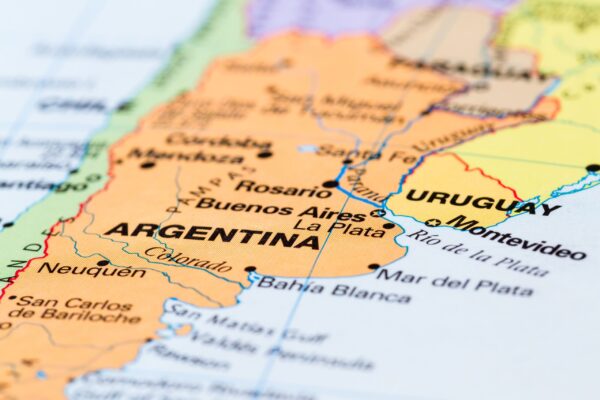
The mid-20th century was a period when many South American countries were actively searching for various options for economic cooperation and integration. An important step in this direction was the economic union of two neighboring republics – Argentina and Chile, which had close economic and historical ties. In 1953, a bilateral treaty was signed, which became a key document in the development of further relations. This union became an important foundation for future regional integration processes. In this review, we will examine the main points of the treaty’s signing, its advantages taking into account the historical context.
External Relations Between Argentina and Chile
Chilean President Carlos Ibáñez del Campo, who assumed the presidency for the second time from 1952 to 1958, made every effort to stabilize his country’s economy. These difficulties were directly related to the post-war period. He placed special emphasis on pursuing an active foreign policy, and also paid attention to further strengthening ties with neighboring countries: for example, with Argentina.
In February 1953, Argentine President Juan Domingo Perón visited Ibáñez. Together they decided to sign the Santiago Agreement. This was the first and confident step to lay the foundation for economic complementarity. As a result, both countries decided to:
- expand trade relations;
- gradually eliminate customs duties;
- promote the industrialization of both countries in every way.
Already in July of the same year, Ibáñez visited Perón on a friendly visit, and on July 8 in Buenos Aires they signed the Treaty of Economic Union between Argentina and Chile.
Both presidents held virtually identical ideas and positions in conducting their country’s policies. Thus, the group “La Línea Recta” was created, which included officers and non-commissioned officers of the army and carabineros (Chilean national police). The main goal of this group was to prepare for a possible seizure of power as soon as Ibáñez made the appropriate decision.
However, in 1955, after the fall of Perón, relations between the two countries were in a state of tension. One of the main reasons was the scandal surrounding Argentine politician Guillermo Kelly, who was imprisoned in Chile at the request of Argentine authorities. Soon he escaped from Santiago prison. This event led to the dismissal of Chilean Foreign Minister Osvaldo Sent-Mari Soruco and Justice Minister Arturo Suñiga Latorre, who also received constitutional charges.
Treaty Signing and Important Historical Context
The bilateral treaty was signed on July 8, 1953, in Buenos Aires, and its preparation was based on a previously created declaration – the “Act of Santiago,” which was agreed upon earlier (in February). The deepening of economic cooperation between countries was intended to create favorable conditions for further exchange of various goods and services.
The agreement with Chile became one of the most successful examples of diplomatic strategy for the Argentine president. This strategy involved the gradual development of the country’s own economy, as well as improving political relations with Chile.
Content and Key Provisions
The document provided for the coordination of economic policy and trade relations, which led to the coordination of the economic policies of the two countries. At that time, such coordination was considered atypical.
This testified to:
- joint discussions of trade rules, tariff policy;
- search for effective measures related to the protection of national production enterprises (the main goal – to exclude undesirable trade conflicts);
- support during active information exchange regarding future industrial development of their country, economic planning.
Seeking to stabilize Chile’s economy after the inflation of the 1940s-1950s, President Ibáñez del Campo used the opportunities of the Argentine market to sell his own goods. This made foreign trade results more predictable.
In addition, this document provided for a reduction of tariffs and quotas on mutual imports. In practice, this decision meant:
- reduction of customs duties on all agricultural products;
- simplification of the import procedure for various industrial goods;
- introduction of special preferences, which was relevant for strategic industries.
As a result, Chile simplified the export process for mineral resources and agricultural products sent to Argentina. The same could be said about imports – a maximally simplified process. This approach contributed to supporting the country’s domestic market while simultaneously reducing the shortage of goods from the “consumer basket” category.
Within the framework of the treaty, mutual investments and joint projects were encouraged, among which it is worth noting:
- creation of joint industrial enterprises specializing in mining, processing, and production activities;
- exchange of modern technologies, experts in specific industries, with the help of which each country planned to increase the efficiency of its own production chain;
- stimulating investments in such key areas as transport, energy, agriculture, and others.
For example, the Chilean president used all the above opportunities to modernize his country’s industrial base. His plans included actively attracting Argentine investments and their technologies to the electric power and mining industries.
Additionally, the treaty allowed easy access to the markets of both countries, which indicated an expansion of sales markets for various goods and services.

This led to such favorable consequences for Chile and Argentina:
- Argentina could send its own industrial goods and agricultural products to the Chilean market without any problems;
- Chile could send its main export goods to the Argentine market, namely – fruits, wine, copper;
- there was gradual development of logistics and transport, and the opportunities of rail and sea transport began to be used more often for trade.
Gradually, Chile was able to increase the growth of its own export economy and thereby strengthen its currency balance. This led to the country reducing its huge dependence on North American and European markets.
As a result, the 1953 bilateral treaty is called not just a trade agreement, but a multi-level economic union. With its help, Chile, together with Argentina, managed to coordinate their countries’ policies and provide special support to the industrial sector. Joint investments together with the development of sales markets allowed them to take strategically important steps and strengthen their own positions in the regional market.
Main Advantages of the Treaty for Both Countries
The bilateral economic union had many benefits, both for Chile and for Argentina’s economy.
The main benefits can be called:
- Expansion of markets and trade. It was possible to maximize the facilitation and simplification of the procedure for exchanging goods and services, which led to an improvement in the economic situation for each of the countries.
- Stimulation of economic growth and development. Thanks to the support received by two important sectors – agricultural and industrial – it was possible to establish a flow of mutual investments.
- Strengthening diplomatic relations. It was possible to reduce tension between countries and thereby increase mutual dependence on each other.
- Active preparation for regional integration. This agreement was called an important prerequisite and the first stage for future multilateral initiatives (for example, the creation of MERCOSUR – the South American Common Market, created in 1991).
Therefore, the bilateral treaty signed in 1953 is called an important page in the history of the two countries. It became the basis for further broader regional integration, testifying to the countries’ desire for cooperation and mutual efforts to develop the post-war economy.
